
RV Storage

Find the right spot for your RV

Whether you've got a Class B camper or a 40-foot motorhome, the right storage spot keeps it safe between trips. Compare facilities across Canada and book online.

What it is

What is RV storage?

A dedicated space — indoor, covered, or outdoor — built to fit recreational vehicles that don't fit in your driveway or HOA rules.

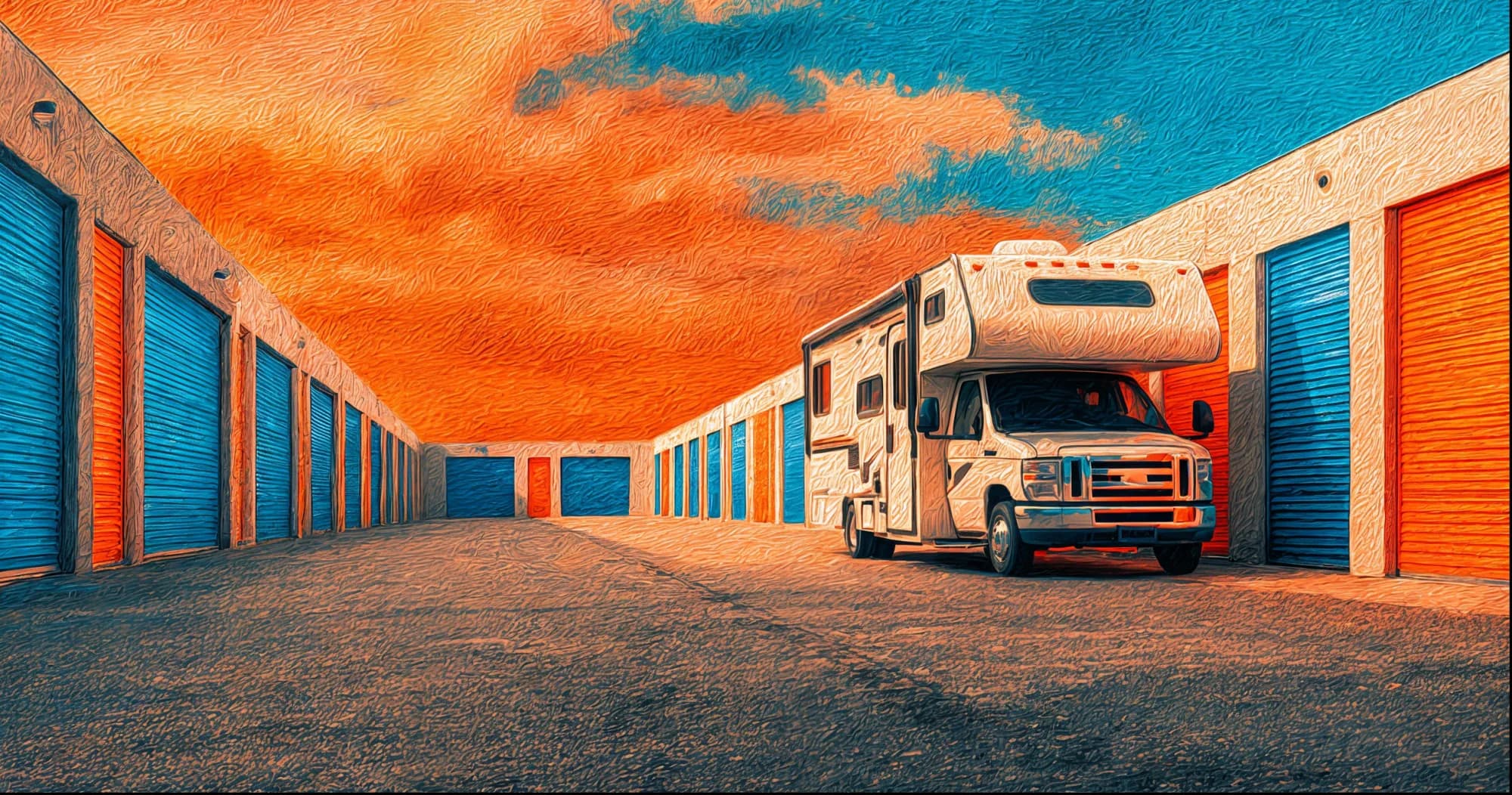
RV storage is purpose-built parking for recreational vehicles: motorhomes, travel trailers, fifth-wheels, pop-ups, toy haulers, and Class A/B/C campers. Unlike standard self-storage, RV spots are sized to handle the length, width, and height of these vehicles — and many offer power, dump stations, and 24/7 access.

Most Canadian RV owners use storage seasonally (October to April), but year-round options are common in southern Ontario, Quebec, and BC where rigs see use into the shoulder seasons.

Built for length

Spots from 25 ft up to 50+ ft so your rig fits comfortably with room to maneuver.

Weather protection

Indoor and covered options shield your investment from snow, UV, and ice damage.

Easy access

Drive-up, pull-through, and 24/7 gate access mean you're road-ready when you are.

Size guide

RV storage size guide

Pick a spot that matches your rig's length, width, and height — including A/C units, awnings, and roof accessories.

10' × 25'

250 sq ft

Small Class B campers, compact travel trailers, pop-ups, toy haulers

10' × 30'

300 sq ft

Medium Class B and Class C campers, mid-size travel trailers, small fifth-wheels

10' × 35'

350 sq ft

Large Class B/C campers, mid-to-large travel trailers, smaller Class A motorhomes

10' × 40'

400 sq ft

Most Class A motorhomes, large travel trailers, fifth-wheels — needs 15+ ft ceilings indoors

Options

Indoor, covered, or outdoor?

Three tiers of protection at three different price points. Pick what matches your rig's value and how often you use it.

Indoor

$150–$450 / month

Fully enclosed, climate-friendly, maximum protection. Best for high-value rigs and long winters.

  • Full weather + UV protection
  • Locked, secured access
  • Best for valuable or rarely-used rigs
  • Some units offer climate control
Most popular

Covered

$100–$250 / month

Carport-style roof or three-sided shelter. Strong middle ground for regular RVers.

  • Roof + UV protection
  • Snow load handled
  • Lower cost than indoor
  • Good for active RVers

Outdoor

$50–$150 / month

Paved or gravel parking inside a secured lot. Most affordable, perfect for budget-conscious owners.

  • Lowest monthly cost
  • Easy drive-up access
  • Gated, often surveilled
  • Bring a quality RV cover
Prep checklist

How to prep your RV for storage

A few hours of prep keeps your rig road-ready and avoids costly repairs come spring.
Before you store

  • Disconnect the battery. Remove and store at room temperature for winter — extends battery life dramatically.
  • Empty all tanks. Black, grey, and fresh water tanks. Hit a dump station first, then run a tank cleaner.
  • Add antifreeze. RV-grade antifreeze in pipes and drains. Skipping this step in Canadian winters cracks plumbing fast.
  • Top off propane, then shut off. Fill tanks, then close valves. Remove tanks if your facility requires it.
  • Stabilize fluids. Change oil, top up brake and radiator fluid, fill the gas tank with stabilizer.

Protect your investment

  • Use wheel chocks. Or jack stands for long-term storage to prevent flat-spotting on tires.
  • Seal roof vents. Inspect and re-caulk if needed. Cover with mesh screens to keep critters out.
  • Defrost and clean. Empty the fridge, prop the door open, and remove all food. Mice love an unguarded RV.
  • Cover the rig. A breathable RV cover protects against UV, sap, snow, and bird damage.

Pro tip — Canadian winters

If you're storing through a Quebec or Ontario winter, remove the battery entirely and bring it inside. Even an outdoor-rated battery loses life in -25°C cold.

FAQ

Common questions about RV storage

Measure your rig's length from bumper to bumper (including spare tire mounts and ladders), then add 2–3 feet for clearance. Most Class B/C campers fit in 25–30 ft spots; Class A motorhomes need 35–50 ft. Always check ceiling height for indoor units — many self-storage units only reach 8–10 ft.

Things to consider

What to look for in an RV facility

Length and height clearance

Measure your rig with awnings retracted but A/C and antennas in place. Add a buffer for ceiling height indoors.

Access hours

24/7 access matters if you camp impromptu. Gated facilities with PIN access are the standard.

Surface and drainage

Paved or hard-packed gravel beats dirt — especially in spring thaw season. Look for sloped drainage.

Power and dump station

Useful if you're storing long-term or want to dewinterize on-site before a trip.

Surveillance and gating

Cameras, fencing, and PIN access are baseline. Ask about lighting and after-hours response.

Insurance

Most facilities require proof of insurance for the rig. Some bundle storage insurance — usually pricier than your own provider.